Tay Ninh, September 5, 2026 – At the conference “Connecting Tay Ninh’s Import-Export Supply Chains and E-Commerce in 2026”, with the theme “Global Connectivity – Expanding Value”, Mr. Vo Quoc Huy, Chairman and CEO of Long An International Port, presented proposals to strengthen connectivity among border gates, industrial parks, production areas, logistics centers, and seaports, with the aim of improving cargo flows and enhancing business competitiveness.
Organized by the Tay Ninh Provincial People’s Committee in coordination with the Ministry of Industry and Trade, the conference brought together around 650 delegates, including 178 foreign enterprises from 27 countries and territories, along with representatives from diplomatic missions, international organizations, business associations, and the wider business community.
As Tay Ninh accelerates the development of its trade, logistics, and supply chain infrastructure, stronger links between the province’s border gates, industrial parks, production areas and seaport infrastructure are expected to expand market access, add value to the goods, and strengthen local businesses’ participation in regional and global supply chains.

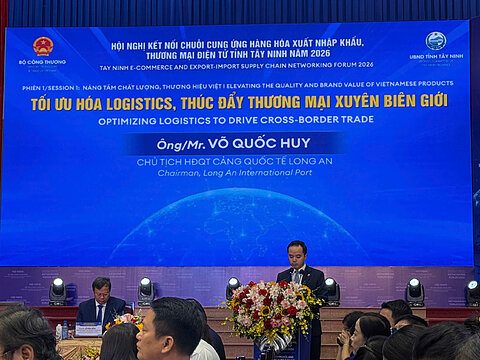
Mr. Vo Quoc Huy – Chairman and CEO of Long An International Port – speaks at the conference “Connecting Tay Ninh’s Import-Export Supply Chains and E-Commerce in 2026”
From Border Gates to Seaports – Connecting the Key Links of the Logistics Chain
Following the administrative merger across Vietnam’s provinces and departments, Tay Ninh is better positioned to leverage its connectivity advantages, bringing together border gates with Cambodia, industrial parks, production areas, transportation infrastructure, and seaport facilities within a broader economic landscape.
From the perspective of a port and logistics operator, Long An International Port proposed strengthening the links among these assets as part of an integrated logistics chain: border gates supporting trade with Cambodia and the ASEAN region; industrial parks and production areas generating cargo; logistics centers handling cargo consolidation, storage and processing; transport infrastructure connecting production and consumption points; and seaport facilities expanding access to domestic and international shipping routes.
“Tay Ninh has a unique advantage in linking international border trade and maritime connectivity. The priority now is to turn that advantage into real logistics capacity – which can move goods efficiently, connect businesses to wider markets. and strengthen the province’s competitiveness”- said Mr. Vo Quoc Huy, Chairman and CEO of Long An International Port.
For this logistics chain to operate effectively, stable cargo volumes and suitable transport modes will be key. Concentrating cargo and gradually establishing regular transport services will give businesses greater flexibility in choosing how their goods are moved, while improving operational efficiency and optimizing logistics costs.
Alongside physical transport infrastructure, developing digital logistics infrastructure and strengthening data connectivity and sharing among businesses, logistics providers, border gates, customs authorities, warehouses and seaports will enable more proactive cargo handling, reduce waiting times, and improve operational efficiency across the logistics chain.

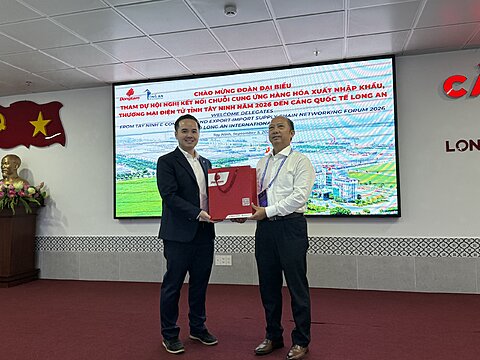
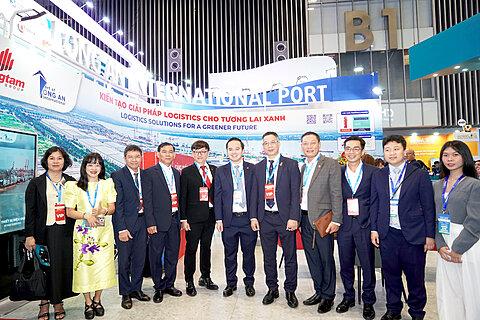
Nearly 80 conference delegates held a working vissit at Long An International Port
Long An International Port in Tay Ninh’s Cargo Connectivity Chain
Located along the Soai Rap River channel and connected to the interregional transport network, Long An International Port continues to invest in infrastructure and equipment while strengthening its operational capabilities. The port aims to serve the import-export needs of businesses in Tay Ninh, Ho Chi Minh City, the Southeast region and the Mekong Delta, while expanding cargo connectivity with Cambodia.
The port currently operates seven quay cranes and a total berth length of 1,670 meters, with the capacity to receive vessels of up to 70,000 DWT. This provides a foundation for the port to gradually develop service routes, expand its ability to handle diverse cargo types, and strengthen the region’s access to maritime transport.
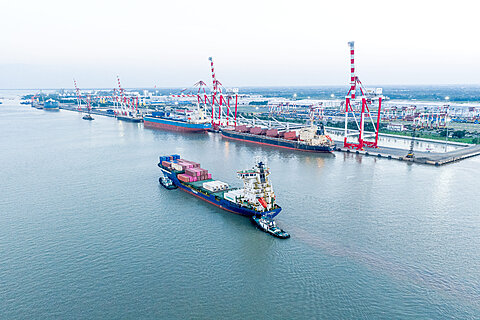
Long An International Port is strategically located within the regional transport and logistics network
Beyond its berths and cargo-handling equipment, Long An International Port has developed an integrated service ecosystem covering port operations, warehousing, transportation, freight forwarding, and logistics services supporting import-export activities. This approach is designed to provide integrated solutions and facilitate supply chain planning for businesses.
The port’s ability to handle a wide range of cargo, including project cargo and oversized and overweight cargo, also enables it to support the transportation of equipment, components, and specialized cargo for industrial, energy, and infrastructure projects.
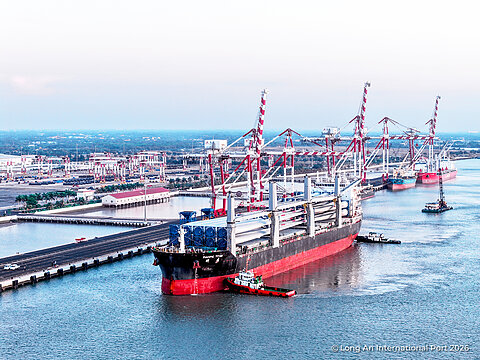
Long An International Port handles a diverse range of cargo, meeting the transportation and logistics needs of businesses
As part of its cross-border connectivity strategy, Long An International Port also proposed the early completion of the legal framework for Vietnam–Cambodia transit cargo. Once the necessary legal conditions are in place, this connection could provide additional transport options, leverage the advantages of inland waterways, and contribute to building two-way cargo flows for logistics activities.
Turning Connectivity Advantages into Competitive Strength
The value of a logistics chain connecting border gates with seaports should ultimately be reflected in tangible benefits for businesses, including faster transit times, more competitive logistics costs, greater choice of transport modes, and broader access to markets.
Achieving this will require coordination among government authorities, manufacturers, cargo owners, industrial parks, logistics providers, shipping lines, border gates and seaports. Building sufficient and consistent cargo volumes will be particularly important to establish and sustain regular transport services.
Based on its operational experience, Long An International Port sees the development of the container market as requiring progress on three fronts, including the legal framework, shipping lines, and consistent cargo volumes. The port looks forward to working with the province, business associations, industrial parks, and the business community to identify import-export demand, connect cargo sources and gradually establish a basis for discussions with shipping lines on volumes, markets and suitable service routes.
As a representative of Long An International Port noted, “It is not enough to attract shipping lines to Long An International Port. More importantly, we need sufficient cargo volumes to keep them here.”
With continued investment in infrastructure, enhanced operational capabilities and the development of integrated logistics services, Long An International Port stands ready to work alongside Tay Ninh and the business community to strengthen connections from border gates, industrial parks and production areas to the seaport. This will contribute to improving supply chain efficiency, strengthening logistics competitiveness and expanding cargo access to domestic, regional and international markets.
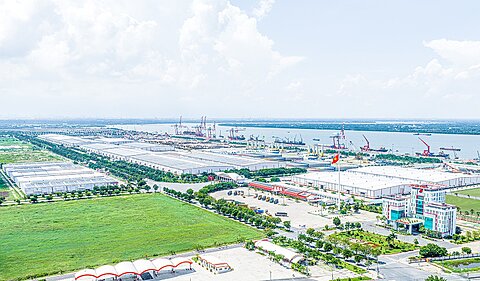
Dongtam Group’s Master project, comprising port, industrial, urban and service development areas in Tan Tap Commune, Tay Ninh Province, Vietnam